Physical Address
304 North Cardinal St.
Dorchester Center, MA 02124
Physical Address
304 North Cardinal St.
Dorchester Center, MA 02124
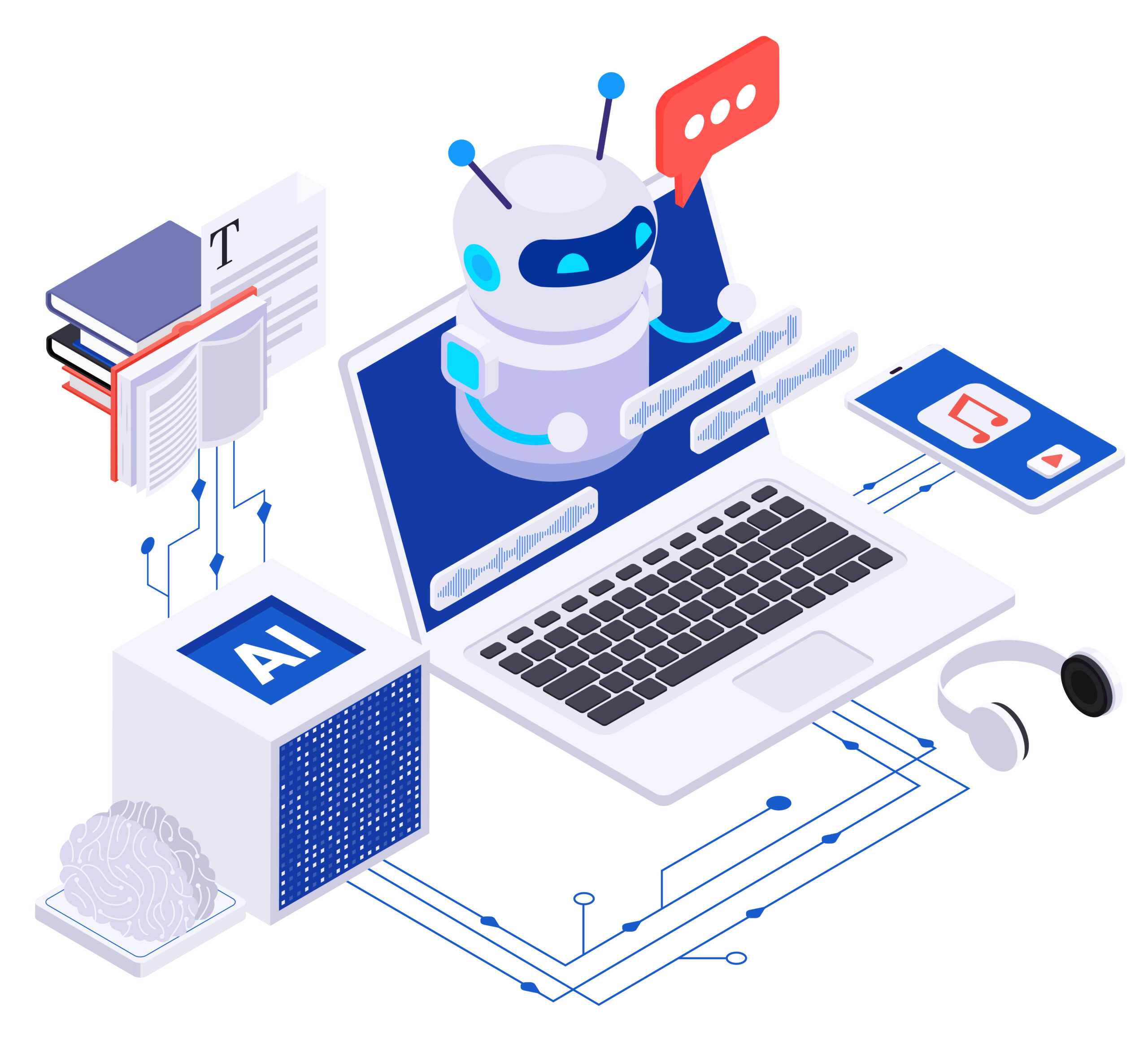
A Multi-Agent System coordinates specialized AI agents to handle complex workflows with structure and reliability. Learn how digital departments improve scalability and ROI.
In the previous article, we defined an AI agent as a goal-driven system that can reason, use tools, and take actions.
That works well for simple tasks. But real business workflows are rarely simple. They involve planning, coordination, validation, and structured execution.
This is where Multi-Agent Systems become important.
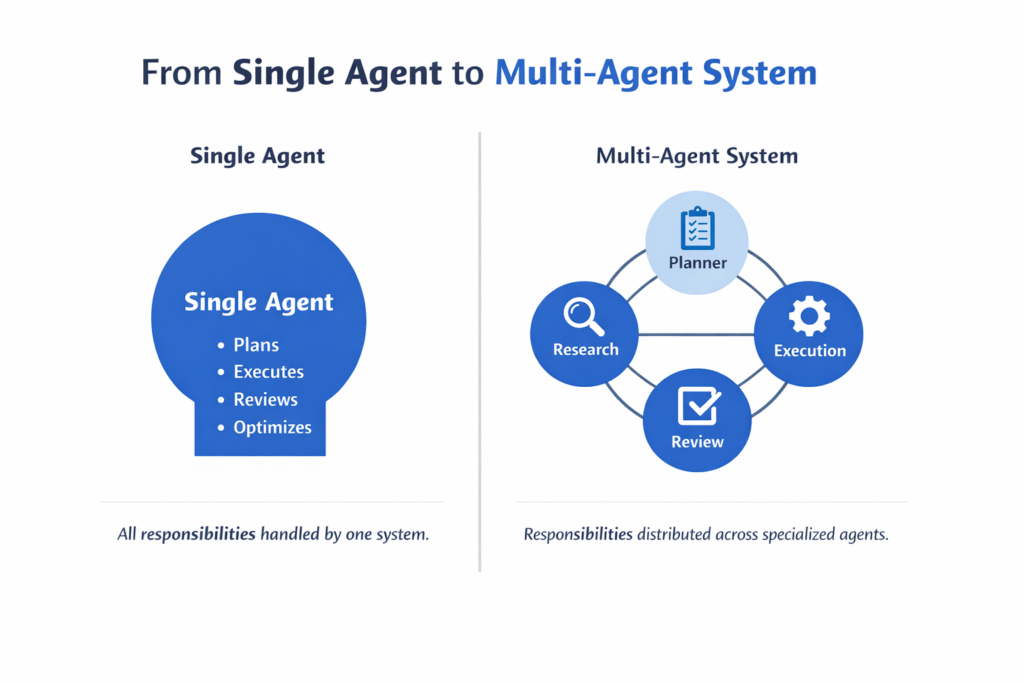
If a single AI agent is like an individual contributor, a Multi-Agent System is like a coordinated team working toward a shared objective.
Single agents are effective for tasks such as:
However, complexity introduces challenges.
When a single agent must plan, execute, verify, and optimize within the same reasoning loop, it can lose track of priorities.
Without defined boundaries, the same system becomes planner, executor, and reviewer. This reduces objectivity.
If reasoning fails at one step, the entire workflow may degrade without detection.
Complex business processes require structure, not just intelligence.
Organizations do not operate with one person handling research, strategy, execution, and review simultaneously.
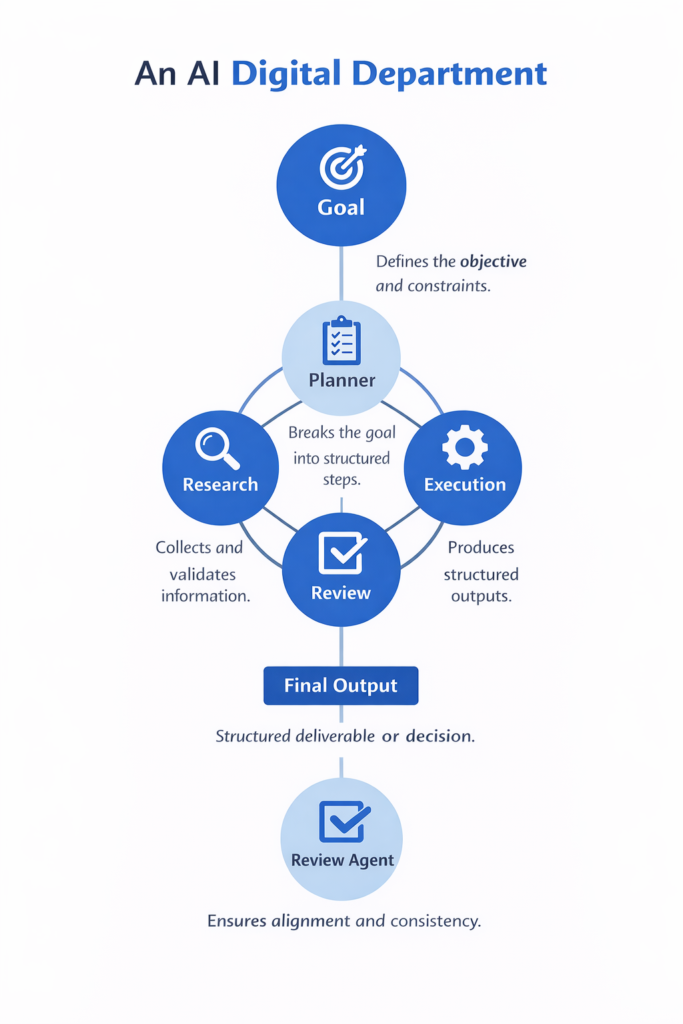
They create departments. Multi-agent systems apply this same logic to AI. You can think of a MAS as a Digital Department. Each agent mirrors a role that would normally exist in a human team.
For example:
Research Agent: Collects and validates information.
Planning Agent: Breaks the goal into structured steps.
Execution Agent: Performs the required actions.
Review Agent: Checks quality, consistency, and alignment with the goal.
The power of a Multi-Agent System lies in the coordination between these roles.
Here is a simplified comparison:
| Feature | Single Agent | Multi-Agent System |
|---|---|---|
| Scope | Broad and overloaded | Specialized roles |
| Reliability | Moderate | Higher through validation |
| Scalability | Limited | Modular and expandable |
| Error Handling | Minimal | Structured review layers |
Single agents automate tasks. Multi-agent systems automate processes. Processes are what drive business value.
Coordination is as important as specialization.
There are two common patterns.
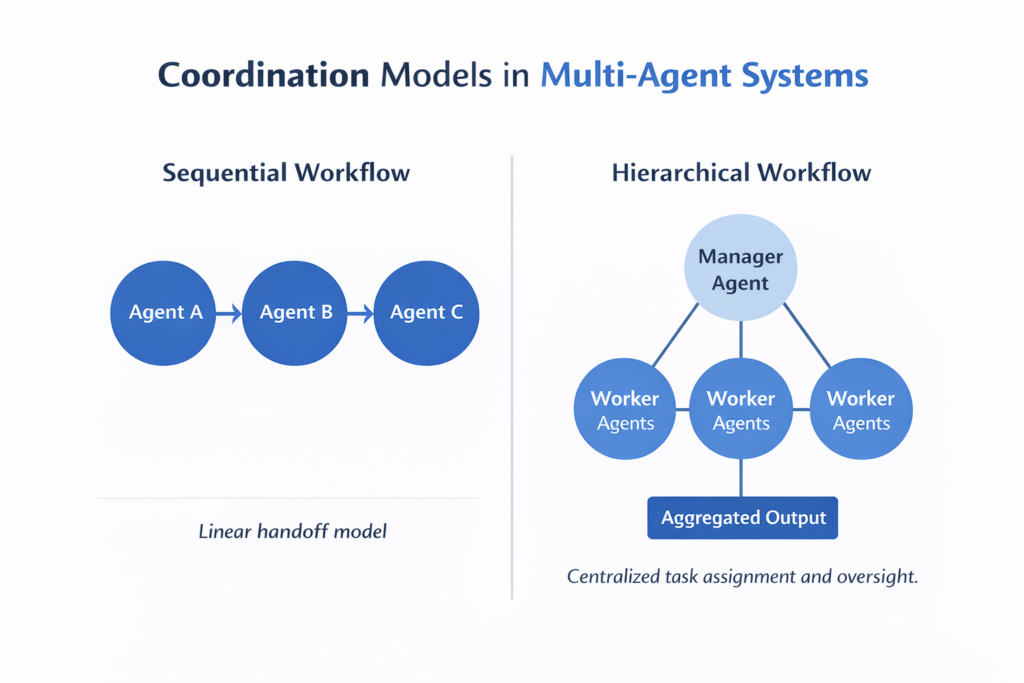
Agent A completes its task.
Agent B receives the output and continues.
Agent C reviews the final result.
This resembles an assembly line. It is simple and predictable.
A Manager Agent receives the goal.
It assigns subtasks to Worker Agents.
It monitors progress and aggregates outputs.
This resembles structured organizational management.
The coordination model determines whether the system remains stable in the face of complexity.
Consider an automated competitive intelligence system.
Goal: Generate a weekly competitor analysis report.
Planner Agent: Defines the scope and data sources.
Research Agent: Collects competitor pricing and announcements.
Analysis Agent: Identifies trends and patterns.
Reviewer Agent: Validates the findings and ensures logical consistency.
Final Output: Structured report delivered automatically.
Instead of a single agent attempting to do everything, responsibilities are clearly divided. This improves reliability and reduces logical drift.
Multi-agent systems are useful when:
They are less appropriate for:
Architecture should match the problem’s complexity.
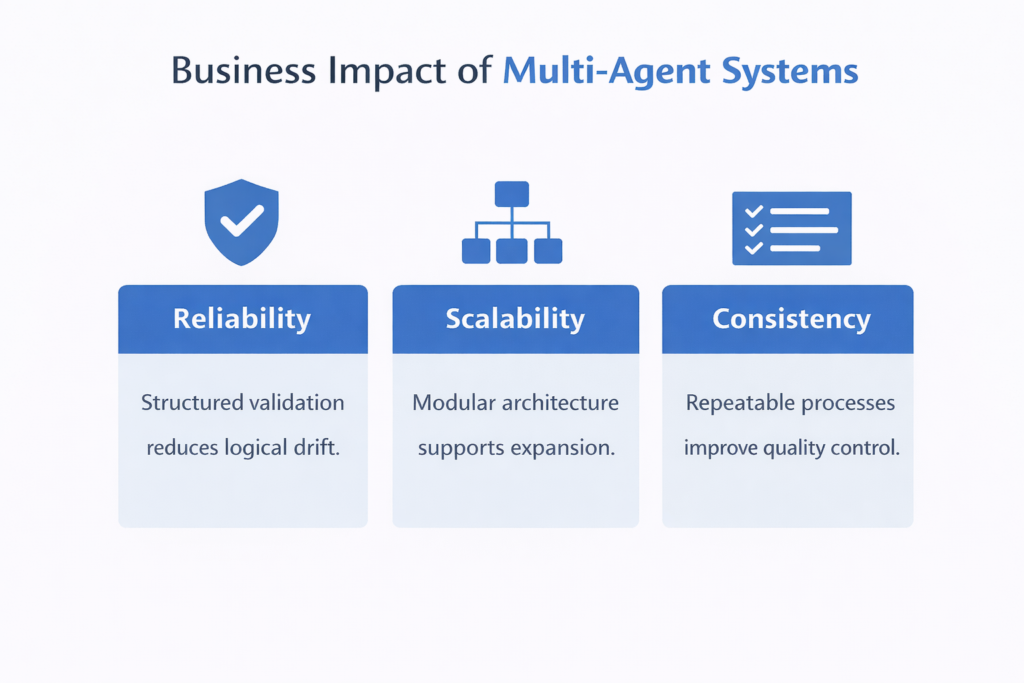
The shift from single agents to Multi-Agent Systems represents a shift from conversational AI to operational AI. A single agent responds, while a Multi-Agent System coordinates. When AI begins to mirror structured organizational workflows, it becomes more than a tool. It becomes part of the process. For businesses aiming for measurable outcomes, that distinction matters.
A Multi-Agent System is structured intelligence. It distributes responsibility across specialized agents, coordinates their actions, and introduces review layers that increase reliability. Single agents are powerful for experimentation. Multi-agent systems are powerful for operational integration.
If the goal is to move from isolated automation to scalable processes, Multi-Agent Systems provide the architectural foundation.